The parts of FloatMerchant merchants touch every day: payroll and invoices, labeling bank money, payouts, settings, and the admin tools behind them.
Features I led
Each one is a case study: the problem, the constraints, what I chose, and what it cost.
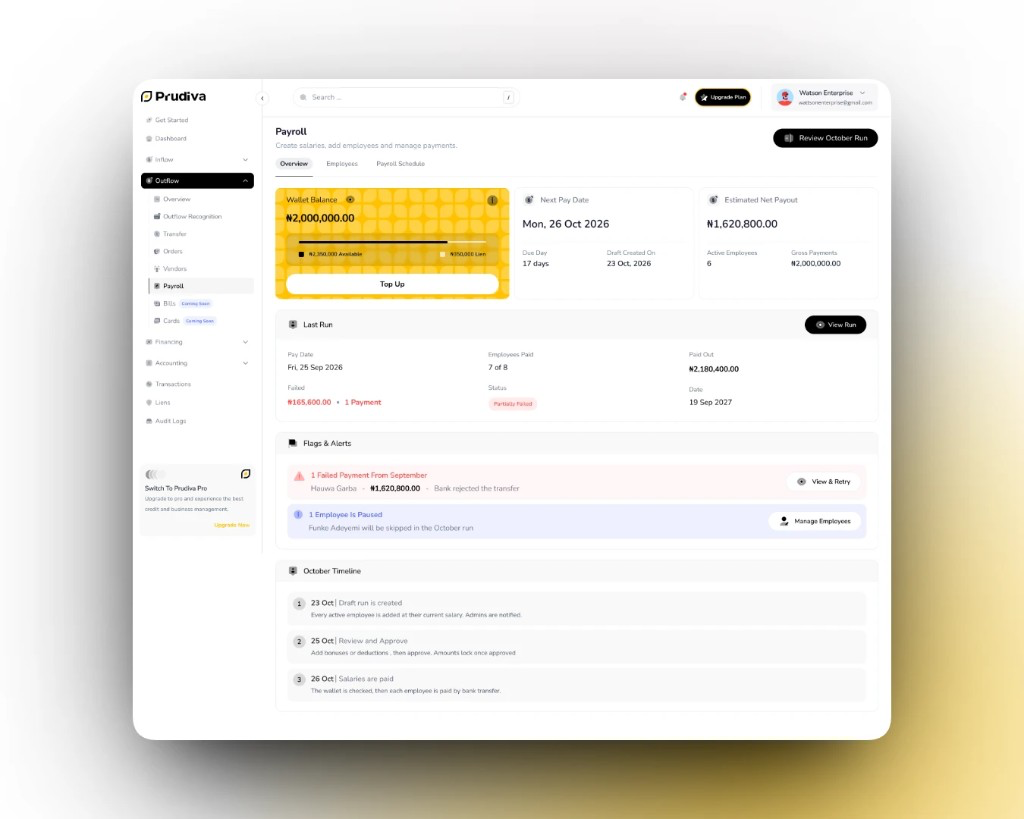 PayrollAdd staff, prepare a month’s salaries, check the wallet, pay people, and retry anyone who failed.
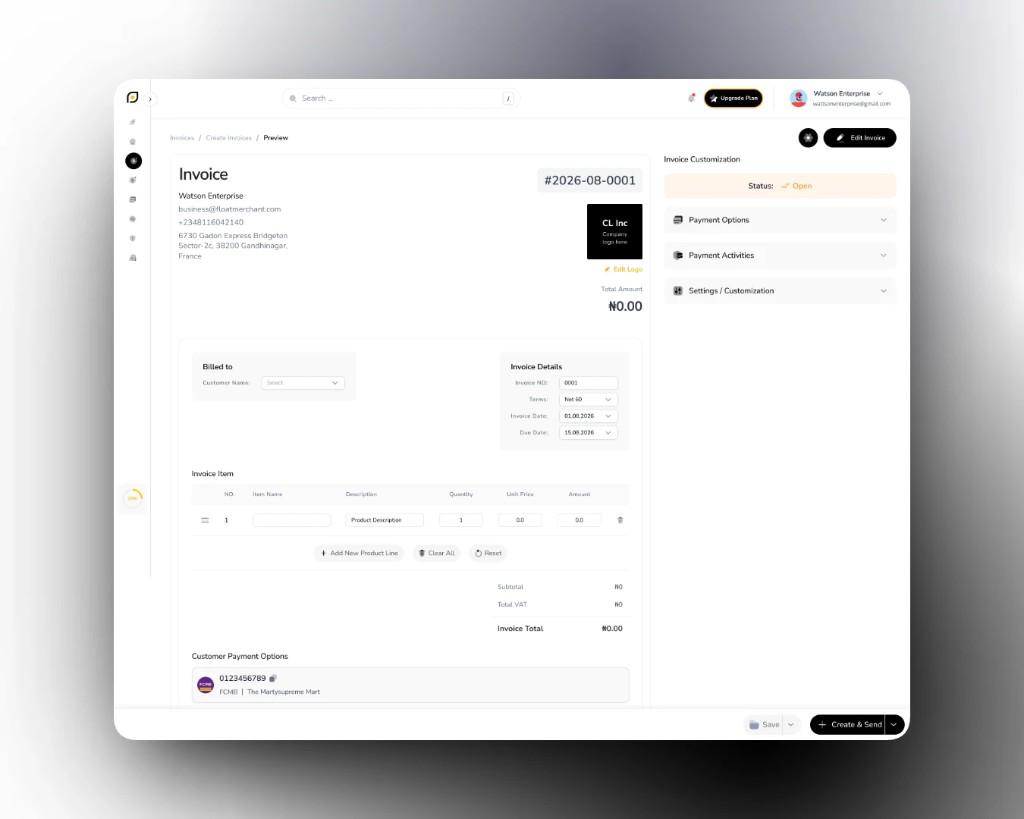 Invoicing & catalogBill customers from FloatMerchant, track what is owed, and keep a list of what you sell.
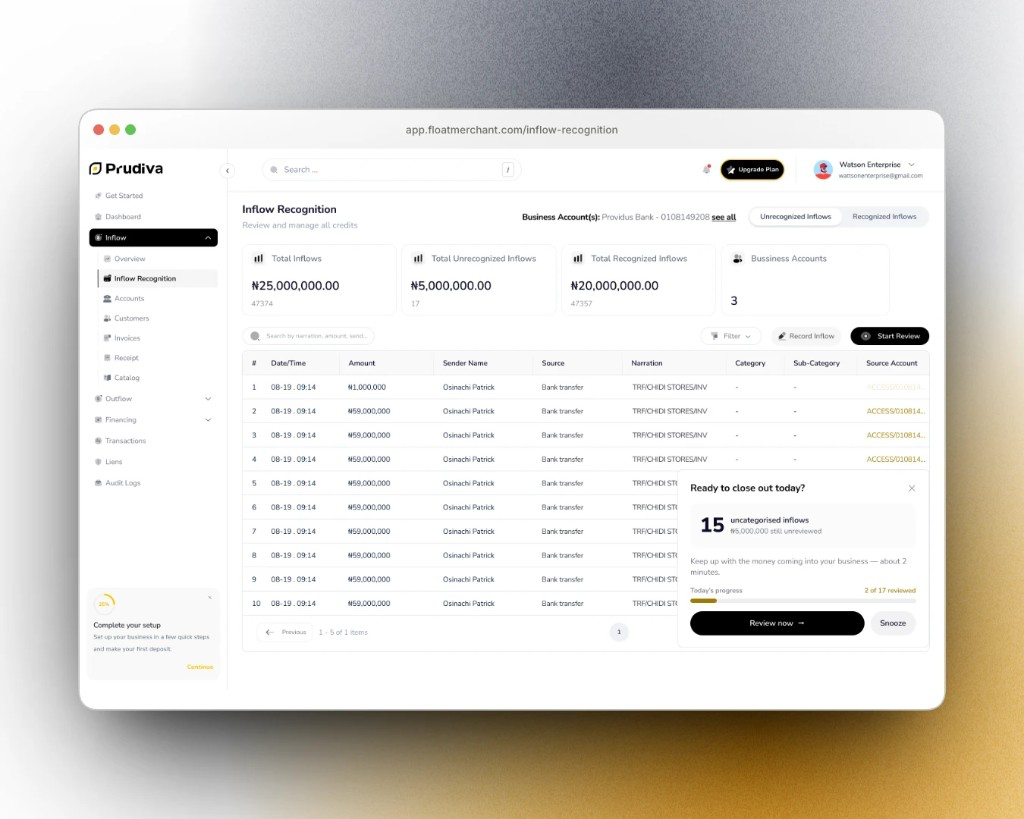 Transaction recognitionLabel bank payments in the app: sales, bills, vendors, and splits for money in and money out.
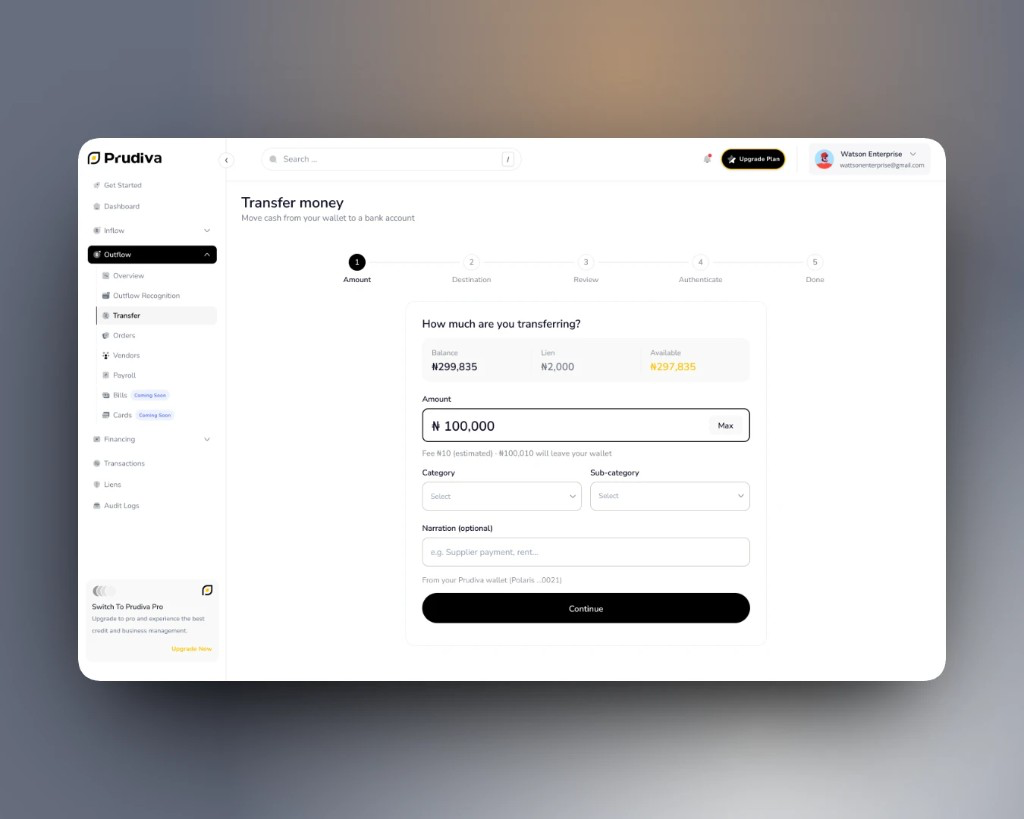 Transfer redesignSend money in clear steps: where it goes, what it costs, a PIN to confirm, and a history you can search.
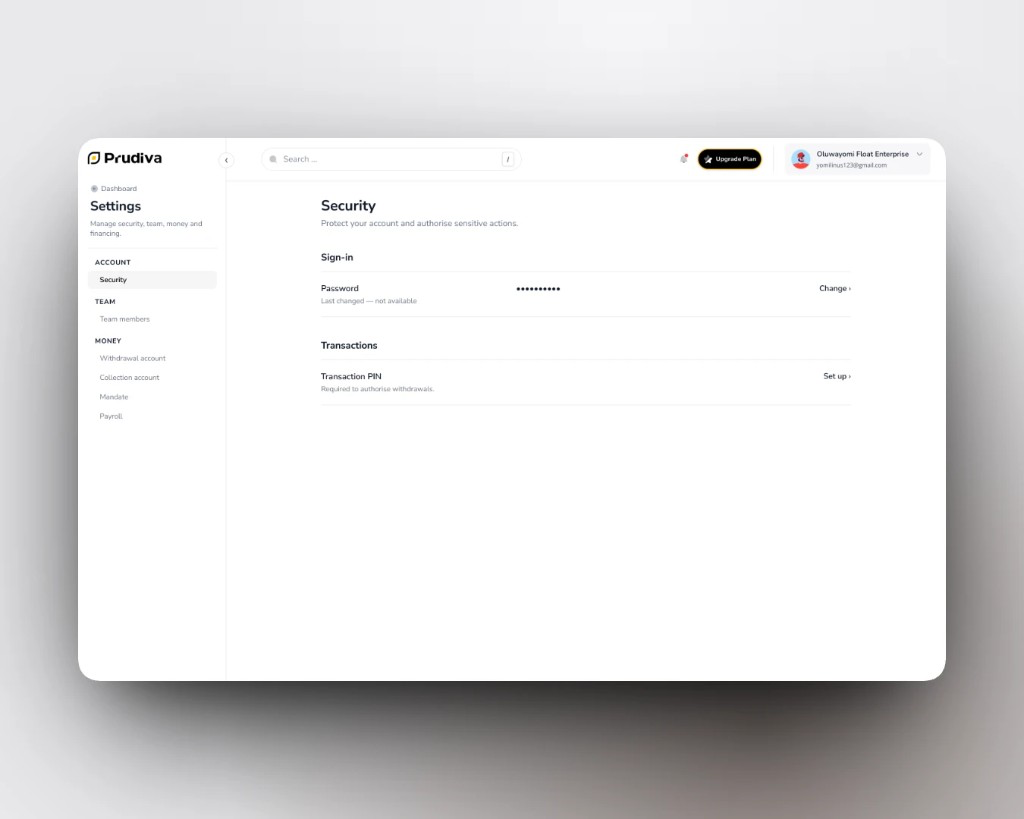 Settings & securityProfile, team, documents, password, and PIN live in one place.
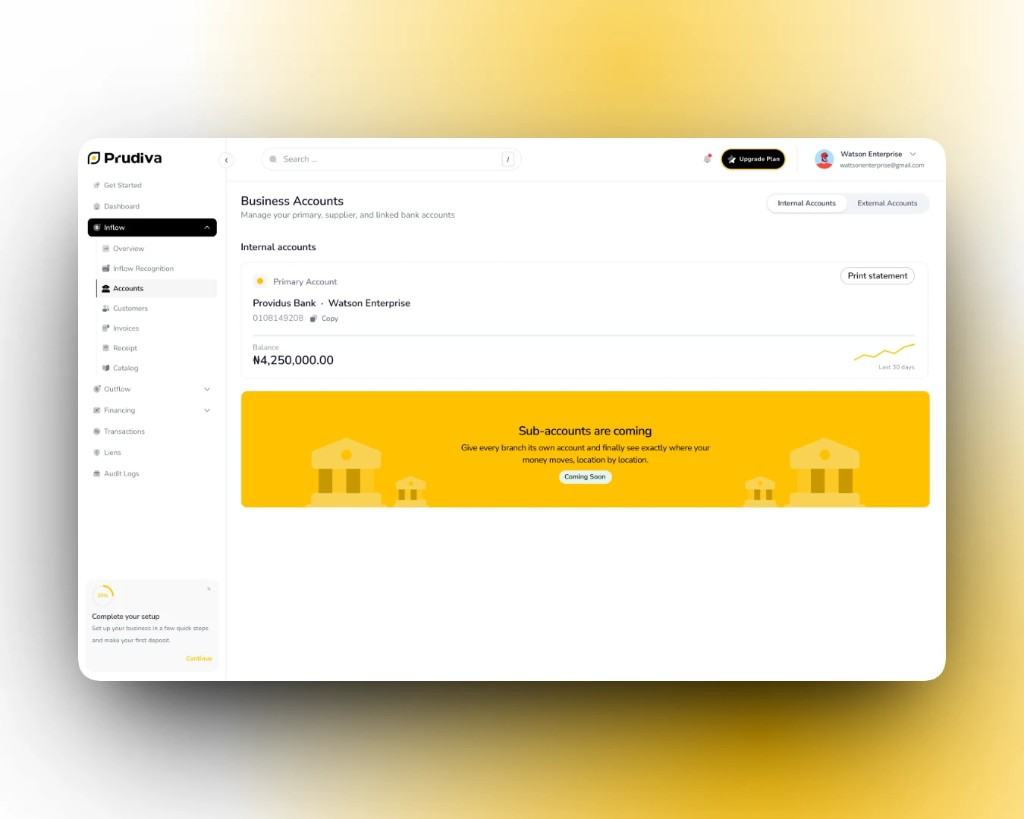 Linked accountsWhen a bank link breaks, you can fix it, and you can ask for a statement without leaving the app.
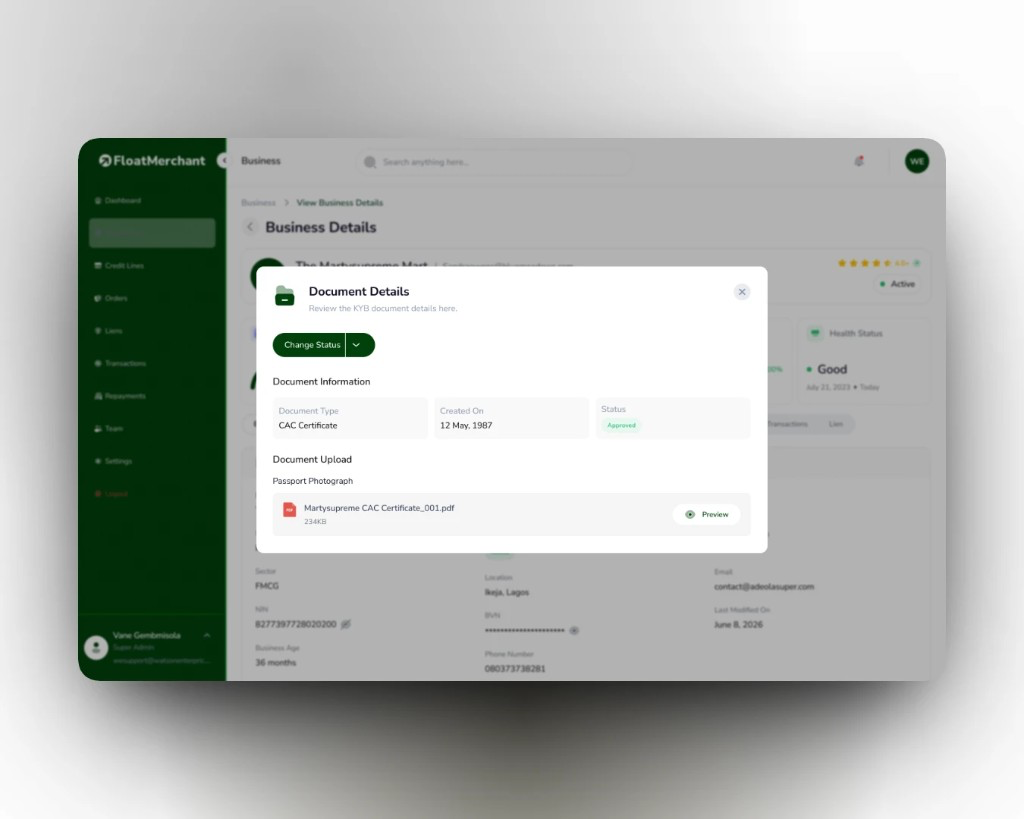 Admin toolsInternal tools to see who changed what, onboard banks, and download order paperwork.
Stack, and why
- ReactMerchant and admin screens people use every day.
- TypeScriptSame language in the apps and the API.
- Node.jsPayroll, transfers, recognition, invoices, and statements on the server.